Most suitable for BSc, BTech and MSc students. Access to a laptop/desktop is mandatory.
Course Introduction
Course Contents
The course is divided into 3 parts: We begin with an introduction to the foundational concepts of astronomy and astrophysics. This includes celestial mechanics, the operating principles of modern telescopes, and theories of planet and Moon formation, culminating in an in-depth exploration of planetary atmospheres. The first part concludes with an introduction to the exciting field of exoplanet science.
In the accompanying hands-on session, you'll learn how to detect exoplanets using radial velocity profiles, working with real data from NASA's Kepler and TESS missions.
In the second part of the course, we delve into stellar structure, properties, and evolution, leading to the formation of compact objects such as neutron stars, black holes, and X-ray binaries.
The corresponding hands-on session will teach you how to estimate stellar brightness through photometric measurements, using observational data from the Keck telescope, USA and the Indian Telescope.
The final part of the course focuses on extragalactic astrophysics, covering topics such as galaxy morphology, active galactic nuclei (AGN), and the properties of quasars.
In the concluding hands-on session, you will perform X-ray time series analysis using X-ray data from pulsars and black holes, obtained from the Indian space mission AstroSat.
No prior experience required - just curiosity and a passion for space. Join us to explore the cosmos through real data, powerful tools, and expert guidance.
What you'll learn
Academic outcome and Benefits:
- Master the Foundations of Modern Astrophysics
- Understand celestial mechanics, telescope design, and the processes behind planet and Moon formation
- Explore the physics of planetary atmospheres and the conditions for habitability
Gain Expertise in Exoplanet Science
- Learn how exoplanets are detected using radial velocity methods
- Analyze real data from NASA’s Kepler and TESS missions
Explore the Life Cycle of Stars and Compact Objects
- Understand stellar evolution, from formation to collapse
- Study exotic objects like neutron stars, black holes, and X-ray binaries
Develop Practical Data Analysis Skills
- Measure stellar brightness using photometric techniques
- Perform time series analysis on X-ray data from India’s AstroSat mission
Uncover the Mysteries of Galaxies and Quasars
- Classify galaxies and study active galactic nuclei (AGN) and quasars
- Learn about extragalactic systems and the large-scale structure of the universe
Career and Skill Benefits
Prepare for Advanced Study or Research
- Build a strong foundation for graduate programs in astronomy, astrophysics, or space science
- Gain experience working with real observational datasets and research workflows
Build In-Demand Technical Skills
- Learn data analysis techniques using real astronomical data
- Develop coding and quantitative skills applicable to research, tech, and data science roles
Connect with the Scientific Community
- Get introduced to data from leading global and Indian space missions
- Learn how to use professional-grade tools and datasets used by astronomers worldwide
- This will stand out in Applications and Internships.
- Enhance your CV with hands-on astrophysics experienceDemonstrate initiative and interdisciplinary expertise in physics, data, and computation
About the Instructor
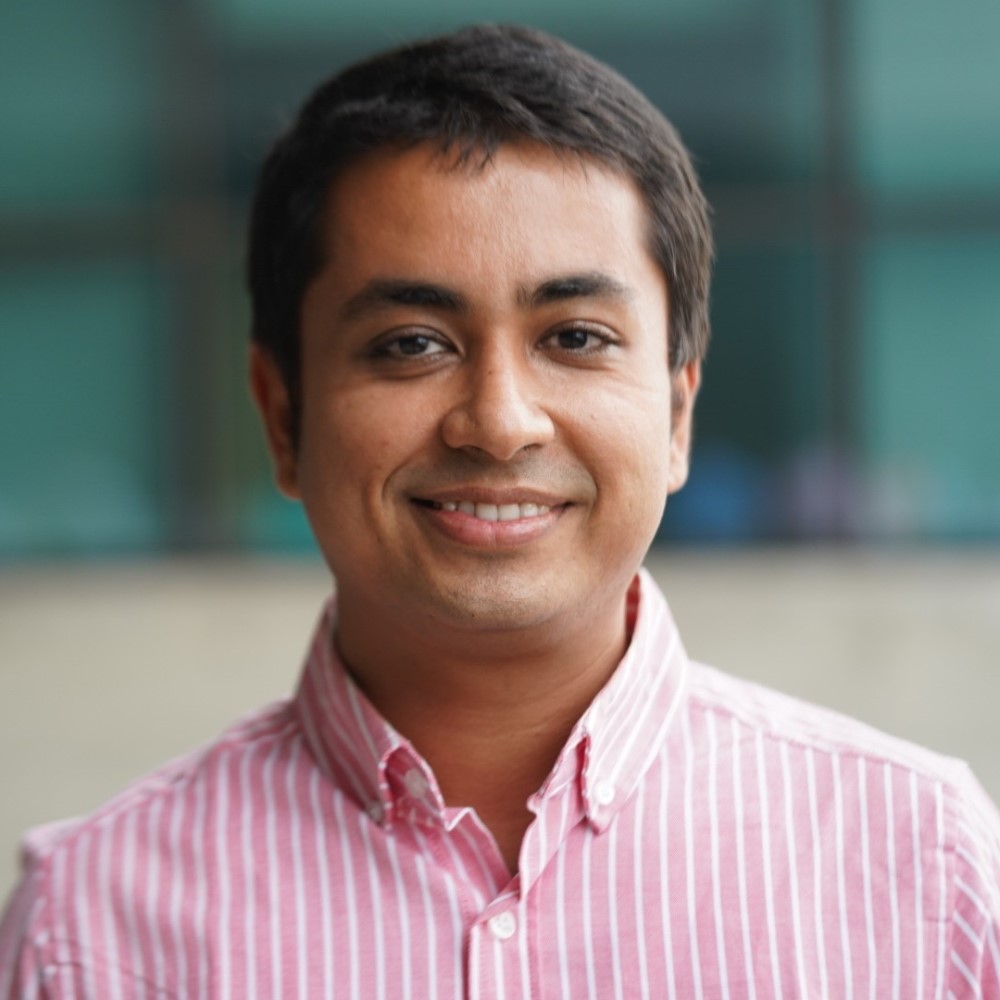
Dr. Mayukh Pahari is a faculty in the Department of Physics at IIT Hyderabad and has 15 years of research experience in the field of X-ray and Gamma-ray Astrophysics, Black hole astronomy, Telescope and instrumentations. He is linked to India’s first multiwavelength satellite mission AstroSat, launched by ISRO. Dr Pahari has successfully taught the Concepts and hands-on Astrophysics course twice, with 100 per cent satisfactory feedback from students of both batches.
Link for Research Profile: https://mayukhpahari.wixsite.com/website
Course Assessment
Assessments will be done through 3 quizzes, each consisting of theoretical sections (50%) and a practical section (50%). Each quiz will carry 30% marks. 10% marks will be provided for attendance and interactions.